Digital Platforms vs Traditional Business Models: What’s Changing
Digital Platforms vs Traditional Business Models: What’s Changing
The way businesses operate has changed significantly with the growth of the internet, smartphones, cloud technology, and online services. Traditional businesses still play an important role in the global economy, but digital platforms have introduced new ways for companies to connect with customers, deliver services, and generate revenue.
From online marketplaces and social networks to subscription services and digital payment systems, platforms are changing how businesses create value and interact with their customers.
But what exactly is different between digital platforms and traditional business models? And how are these changes affecting modern businesses?
This article explores the key differences and explains how business models are evolving in the digital age.
What Is a Traditional Business Model?
A traditional business model generally involves a company creating or purchasing products or services and selling them directly to customers.
Examples include:
- Retail stores
- Restaurants
- Manufacturing companies
- Local service businesses
- Physical offices
- Wholesale businesses
In many traditional business models, the company controls most parts of the customer experience, from production and inventory to sales and distribution.
For example, a retail store may purchase products from suppliers, keep them in physical inventory, and sell them directly to customers at a physical location.
What Is a Digital Platform Business Model?
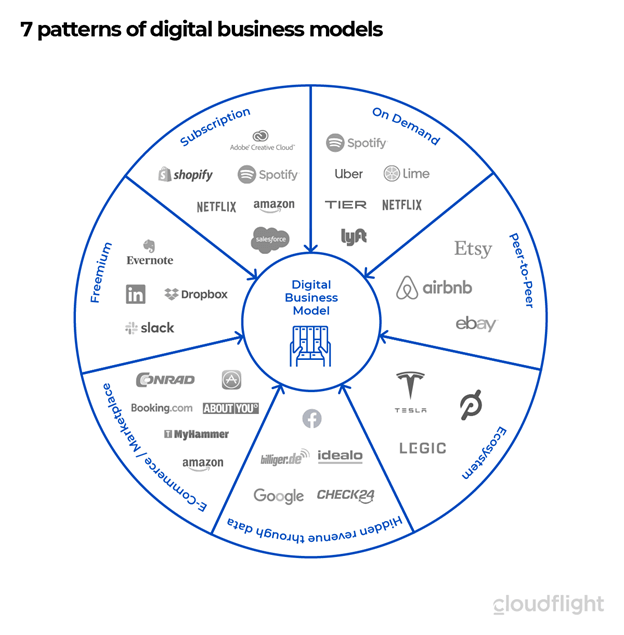
A digital platform business model typically connects different groups of users and enables them to interact, exchange information, sell products, or provide services.
Instead of producing everything itself, a platform may create value by providing the technology and infrastructure that connects participants.
Examples of platform-based businesses include:
- Online marketplaces
- Freelance platforms
- Ride-sharing services
- Food delivery platforms
- Social media networks
- Online booking platforms
- Digital payment ecosystems
For example, an online marketplace can connect buyers and sellers without directly producing every product listed on the platform.
Digital Platforms vs Traditional Business Models
The biggest difference is often how value is created and delivered.
| Feature | Traditional Business Model | Digital Platform Model |
|---|---|---|
| Main structure | Company sells products or services | Platform connects users or businesses |
| Location | Often physical or centralized | Primarily online |
| Customer reach | Often limited by location | Potentially global |
| Distribution | Physical or direct | Digital and network-based |
| Growth | Often requires additional resources | Can scale through technology and network effects |
| Interaction | Mainly company-to-customer | Often user-to-user or multi-sided |
| Data | May be more limited | Can generate extensive digital data |
These differences do not mean that one model completely replaces the other. Many modern businesses combine traditional operations with digital platforms.
The Rise of the Platform Economy
The platform economy has grown as internet access and digital technologies have become more widespread.
Digital platforms can bring together different groups within one ecosystem.
For example:
Buyer ↔ Digital Platform ↔ Seller
The platform provides the infrastructure that allows buyers and sellers to discover each other, communicate, complete transactions, and sometimes leave reviews.
This model can create value by increasing connections between participants.
Customer Reach Is Changing
One major advantage of digital business models is the ability to reach customers beyond a local area.
A traditional store may primarily serve customers who can physically visit the location.
An online business can potentially serve customers from different cities or countries, depending on its products, logistics, regulations, and market strategy.
This has created opportunities for small businesses and entrepreneurs to access larger markets without opening physical locations everywhere.
Lower Barriers to Starting a Business
Digital technology has made it easier for many people to start online businesses.
Entrepreneurs can use:
- E-commerce platforms
- Website builders
- Social media
- Digital payment services
- Cloud software
- Online advertising
- Freelance marketplaces
These tools can reduce some of the infrastructure requirements associated with starting a traditional business.
However, digital businesses still require investment in technology, marketing, customer service, security, and operations.
The Role of Data
Data has become an important part of modern business models.
Digital platforms can collect information about user interactions, purchases, searches, engagement, and other activities, subject to applicable laws and privacy policies.
Businesses can analyze this information to understand customer behavior and improve products, services, marketing campaigns, and user experiences.
Traditional businesses can also collect customer data, but digital platforms often have more opportunities to capture information throughout the online customer journey.
Network Effects
One important concept associated with digital platforms is the network effect.
A platform may become more useful as more participants join.
For example, a marketplace with more sellers can provide customers with more choices. More customers may then attract additional sellers.
This can create a cycle:
More Sellers → More Choices → More Customers → More Sellers
Network effects can be valuable, but they do not guarantee success. Platforms still need to provide a useful experience, maintain trust, manage competition, and solve problems for their users.
Digital Payments Are Changing Transactions
Digital payments have also changed how businesses sell products and services.
Customers can increasingly pay through:
- Debit and credit cards
- Mobile wallets
- Bank transfers
- Digital payment services
- Online checkout systems
Digital payments can make online transactions faster and more convenient, although businesses need to consider transaction fees, security, fraud prevention, and local regulations.
Traditional Businesses Are Going Digital
The rise of digital platforms does not mean traditional businesses are disappearing.
Many traditional companies are adopting digital tools to improve their operations.
For example, a local retailer may now offer:
- Online ordering
- Home delivery
- Social media marketing
- Digital payments
- Online customer support
- E-commerce services
This creates a hybrid business model that combines physical operations with digital channels.
Customer Expectations Are Changing
Digital technology has also changed customer expectations.
Many customers now expect businesses to provide:
- Fast communication
- Online information
- Convenient payments
- Easy ordering
- Mobile-friendly websites
- Personalized experiences
- Quick customer support
Businesses that fail to meet changing customer expectations may face greater competition from companies offering more convenient digital experiences.
Challenges of Digital Platform Business Models
Digital platforms offer many opportunities, but they also have challenges.
Cybersecurity
Online businesses need to protect accounts, transactions, and customer information from security threats.
Privacy
Businesses that collect personal information must handle data responsibly and comply with applicable privacy requirements.
Competition
Digital markets can become highly competitive, especially when many businesses target the same audience.
Platform Dependency
Businesses that rely heavily on third-party platforms may be affected by changes to fees, algorithms, policies, or access.
Trust and Safety
Marketplaces and community platforms need systems to handle fraud, scams, fake accounts, disputes, and inappropriate activity.
The Future of Business Models
The future of business is likely to involve a combination of traditional and digital models rather than a simple replacement of one by the other.
Businesses can combine physical locations with e-commerce, human customer service with automation, and traditional marketing with digital advertising.
Technologies such as artificial intelligence, cloud computing, automation, digital payments, and data analytics will continue to influence how businesses operate.
The companies that adapt successfully will need to focus not only on technology but also on customer needs, security, reliability, and long-term value.
How Businesses Can Adapt
Businesses looking to adapt to the digital economy can start with practical steps:
- Create a professional online presence.
- Understand where customers spend time online.
- Offer convenient digital payment options.
- Consider e-commerce or online booking.
- Use social media strategically.
- Improve website and mobile experiences.
- Use analytics to understand customer behavior.
- Protect customer data.
- Automate repetitive tasks where appropriate.
- Continue improving based on customer feedback.
Final Thoughts
The difference between digital platforms and traditional business models is becoming less clear as businesses increasingly combine physical and digital operations.
Traditional business models often focus on producing and selling products or services directly, while digital platforms can create value by connecting different groups of users through technology.
The growth of e-commerce, digital payments, social media, cloud computing, and online marketplaces has created new opportunities for businesses of different sizes.
Rather than viewing digital platforms and traditional business models as completely separate systems, businesses can consider how both approaches can work together. A strong digital strategy can help traditional companies expand their reach, improve customer experiences, and compete in an increasingly connected economy.
Frequently Asked Questions
What is the difference between a digital platform and a traditional business?
A traditional business generally creates and sells products or services directly to customers, while a digital platform often connects different groups of users and provides the technology needed for interaction or transactions.
What is a platform business model?
A platform business model creates value by connecting two or more groups, such as buyers and sellers, customers and service providers, or creators and audiences.
Are traditional businesses becoming digital?
Many traditional businesses are adopting digital tools such as e-commerce, online payments, social media, digital marketing, and online customer support.
What are the advantages of digital business models?
Digital business models can provide broader market access, flexible operations, digital customer interactions, data-driven insights, and opportunities to scale through technology.
Will digital platforms replace traditional businesses?
Digital platforms are changing many industries, but traditional businesses continue to operate successfully. Many companies are combining traditional operations with digital technologies to serve customers more effectively.